
Finding a reliable home tutor in I 12 Islamabad is a priority for many families. School workloads keep rising. Parents want real progress, a safe place to learn, and a teacher who knows the syllabus.
Want a quick recommendation? Contact us on WhatsApp and share your child’s class, board, and subjects. We will reply with a matched option. Prefer to research first? Keep reading.
This guide compares the main tutoring options. It uses published research and real family experience. It also shows where the evidence has limits. Our team at Tutor at Home hears the same questions every week, so this guide is built around them.
Why Tutoring Is Growing in Islamabad
Private tutoring is common across Pakistan. Islamabad is no exception. Surveys such as ASER Pakistan have long recorded gaps in basic reading and numeracy. Many families fill those gaps with extra support.
The capital adds its own pressure. Federal admissions are competitive. Cambridge pathways raise the bar. So demand for home tuition in I 12 Islamabad often starts in primary school. It no longer waits for board exams. I-12 is a growing residential sector. Many households are still building their network of schools, tutors, and neighbours. Word-of-mouth advice is limited. Verified, local tutors are especially valuable here.
Three Trends We See in Family Requests
These are observations from our service demand. They are not census data.
- Parents want steady weekly support, not last-minute rescue.
- Families compare tutors by verified skills, not talk alone.
- Hybrid plans are growing, with home teaching plus online revision.
Many parents now ask how to find the best tutor in I 12 Islamabad. They want a clear process, not guesswork. The same pattern appears in our guide to a home tutor in I 10 Islamabad.
Signs Your Child Needs Extra Help
Not every struggling child needs a tutor. But some signs deserve attention. Act early, because small gaps grow fast.
- Homework takes far longer than it should.
- Marks drop in one or two subjects.
- Your child avoids a subject or hides tests.
- Confidence falls after poor results.
- Teachers report missed basics.
Talk to your child first. Ask what feels hard. Then check with the school teacher. Together you can decide what kind of help fits.
The Main Tutoring Formats
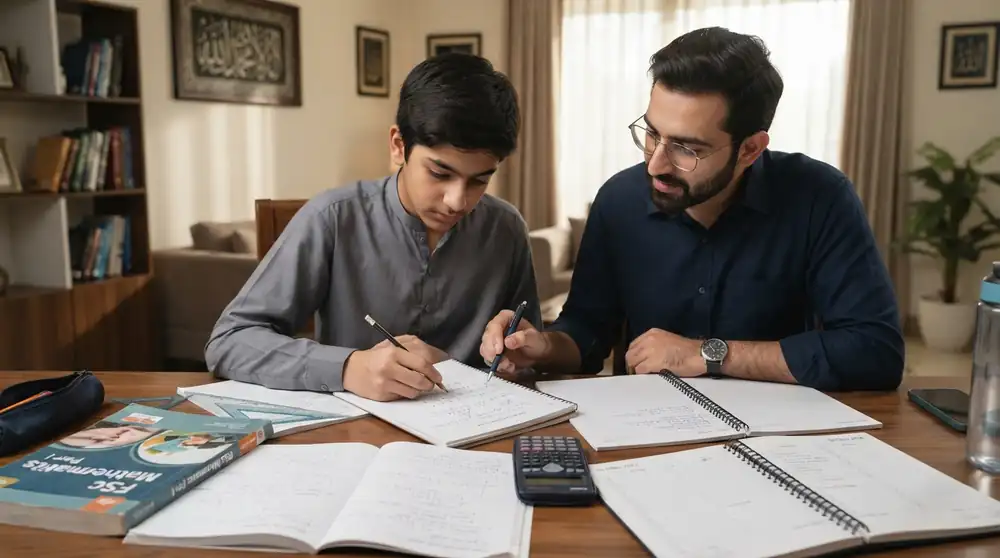
Tutoring is not one product. Each format solves a different problem. Compare like with like.
- Home tutoring: a tutor visits your house for personal sessions.
- Online tutoring: live video lessons from anywhere.
- Academy or coaching centre: group classes on a fixed timetable.
- Small group lessons: one tutor, two to four students.
- Crash courses: short, intensive programmes before exams.
Home tutoring is strong at finding gaps. It also builds study habits. Academies offer structure and peer energy. Crash courses help with revision but rarely repair weak foundations.
What Private Tutoring Really Means
A private tutor in I 12 Islamabad is a qualified individual. They teach one child or a small group. They work independently of any institution.
That independence brings flexibility. It also puts the vetting on the family. This is why the selection checklist later in this guide matters.
Tutor availability also differs between sectors. Our page on a home tutor in I 8 Islamabad shows how.
Home Tutoring Versus Online Tutoring
Online tutoring grew fast after school closures. Research suggests it works when the learner is motivated. It also needs a stable connection.
Evidence for younger children is weaker. Attention is harder to hold on screen. Device supervision and handwriting practice are harder too.
A tutor at your home sees how a child writes. They see how notebooks are kept. They see how a child reacts to difficulty. Families who want a female tutor in I 12 Islamabad also value meeting her in person. Parents can confirm comfort and safety first.
- Home: stronger supervision for primary and middle school.
- Online: wider tutor choice and no travel time.
- Home: no dependence on internet or power backup.
- Online: easy recordings and shared digital notes.
- Hybrid: weekly home sessions plus online revision.
Power Cuts and Connectivity
Outages and weak internet are real problems in Pakistan. Reliability deserves honest weight. For core subjects, many families find in-person lessons more dependable. Online sessions then serve as a backup. Use them during illness, travel, or disruption. Our guide to a home tutor in I 9 Islamabad explores the same trade-off.
Private Tutoring Versus Group Learning
Group learning has real strengths. Peers motivate each other. Discussion exposes students to different reasoning. The cost per student is lower.
The Education Endowment Foundation rates small group tuition as effective. Gains are slightly below one-to-one tuition. So group size matters more than the label.
Large groups have a pace problem. A teacher must teach in the middle. Strong students are under-challenged. Weak students fall further behind. A private tutor in I 12 Islamabad can change speed daily. They repeat a concept until it is secure. They skip what the child already knows.
- Group: lower cost per child and peer motivation.
- Private: pace, content, and feedback fit one child.
- Group: confusion can stay hidden when students stay silent.
- Private: higher cost per hour but fewer wasted hours.
Comparing Different Educational Boards

Tutoring is not one product. Each format solves a different problem. Compare like with like.
- Home tutoring: a tutor visits your house for personal sessions.
- Online tutoring: live video lessons from anywhere.
- Academy or coaching centre: group classes on a fixed timetable.
- Small group lessons: one tutor, two to four students.
- Crash courses: short, intensive programmes before exams.
Home tutoring is strong at finding gaps. It also builds study habits. Academies offer structure and peer energy. Crash courses help with revision but rarely repair weak foundations.
What Private Tutoring Really Means
A private tutor in I 12 Islamabad is a qualified individual. They teach one child or a small group. They work independently of any institution.
That independence brings flexibility. It also puts the vetting on the family. This is why the selection checklist later in this guide matters.
Tutor availability also differs between sectors. Our page on a home tutor in I 8 Islamabad shows how.
Home Tutoring Versus Online Tutoring
Online tutoring grew fast after school closures. Research suggests it works when the learner is motivated. It also needs a stable connection.
Evidence for younger children is weaker. Attention is harder to hold on screen. Device supervision and handwriting practice are harder too.
A tutor at your home sees how a child writes. They see how notebooks are kept. They see how a child reacts to difficulty. Families who want a female tutor in I 12 Islamabad also value meeting her in person. Parents can confirm comfort and safety first.
- Home: stronger supervision for primary and middle school.
- Online: wider tutor choice and no travel time.
- Home: no dependence on internet or power backup.
- Online: easy recordings and shared digital notes.
- Hybrid: weekly home sessions plus online revision.
Power Cuts and Connectivity
Outages and weak internet are real problems in Pakistan. Reliability deserves honest weight. For core subjects, many families find in-person lessons more dependable. Online sessions then serve as a backup. Use them during illness, travel, or disruption. Our guide to a home tutor in I 9 Islamabad explores the same trade-off.
Private Tutoring Versus Group Learning
Group learning has real strengths. Peers motivate each other. Discussion exposes students to different reasoning. The cost per student is lower.
The Education Endowment Foundation rates small group tuition as effective. Gains are slightly below one-to-one tuition. So group size matters more than the label.
Large groups have a pace problem. A teacher must teach in the middle. Strong students are under-challenged. Weak students fall further behind. A private tutor in I 12 Islamabad can change speed daily. They repeat a concept until it is secure. They skip what the child already knows.
- Group: lower cost per child and peer motivation.
- Private: pace, content, and feedback fit one child.
- Group: confusion can stay hidden when students stay silent.
- Private: higher cost per hour but fewer wasted hours.
A Practical Middle Path
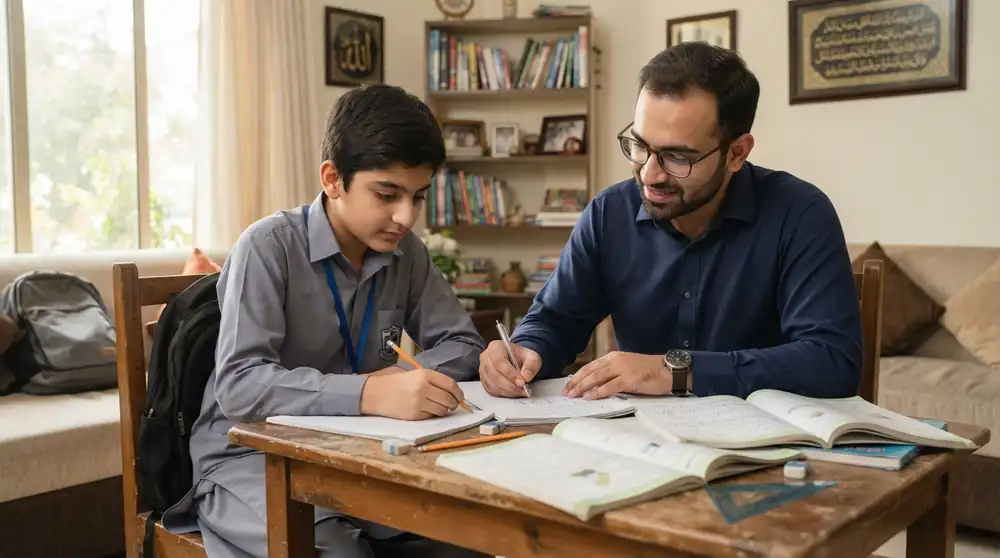
A pair or trio is a smart compromise. It keeps personal attention. It also shares the fee.
Siblings or classmates often work well together. They should follow the same board. They should be close in ability.
If one child pulls far ahead, the pair stops working. Review the grouping every term.
Why One-to-One Learning Works
The best-known evidence comes from Benjamin Bloom’s 1984 research. It reported that students in one-to-one mastery tutoring scored about two standard deviations above conventional classes. Later reviews suggest real-world gains are smaller. The direction is still consistent. Personal tutoring tends to beat standard classroom teaching.
Why does it work? The tutor sees every answer. Errors get fixed before they harden. Questioning is low pressure. Children who stay silent in a crowded class often ask freely with one adult.
- Personal diagnosis of strengths and gaps.
- Immediate correction of errors and misconceptions.
- Flexible pacing for fast and slow learners.
- Stronger confidence and willingness to ask questions.
- Accountability through regular progress reports.
Which Boards Do Islamabad Students Follow?
Islamabad students follow several systems. A tutor must match the exact board. Most federal schools follow FBISE. Its syllabi and past papers are on the Federal Board website.
Others follow Cambridge O Level and A Level. Some follow the Aga Khan University Examination Board. Families who move from Rawalpindi may follow Punjab boards.
Always confirm which board your child’s school uses. Syllabus changes happen. Ask the school for the latest outline.
How Boards Differ in Practice
The differences show up in lessons.
- FBISE: syllabus driven, with strong focus on textbook mastery.
- Cambridge: skills and application, with a heavy past paper culture.
- Punjab boards: provincial textbooks and board-specific patterns.
- AKU EB: concept-focused assessment with local context.
FBISE stresses textbook coverage and structured questions. Cambridge rewards application and careful reading of command words. A tutor strong in Cambridge Maths is not automatically strong in FBISE Physics. The reverse is also true.
Matching a Tutor to Your Board
Ask every tutor which board they taught recently. Request a sample plan for one topic. Look for specific examples, not general claims.
A good plan names the topic, the weekly goal, and the practice material. It also says how progress will be checked.
Vague promises are a warning sign.
Schools Your Child May Attend
Islamabad families choose among many schools. Some enroll at Millennium Roots campuses. Others look at Headstart, Maarif Schools, or Froebel’s. Each school has its own pace, homework style, and assessment pattern. A tutor should know these details. They shape what a child needs at home.
Share your child’s school name when you hire. It helps with matching.
Working With Your Child’s School
A tutor should support the school, not compete with it. Share the school’s term plan. Share recent test papers and teacher comments. Good tutors align lessons with classwork. They pre-teach tough topics. They revise recent ones. Keep the school teacher informed. Short and repeated messages help every child. Teachers help students based on their syllabus, it doesn’t matter if they are from Future World, Beaconhouse, or the International School of Islamabad
Subjects Families Ask For Most
Mathematics leads the list. English comes next, especially writing and grammar. Science follows, mainly physics, chemistry, and biology.
Many families also ask for Urdu, Islamiyat, and computer science. Needs change with the class level and the board.
Ask for subject-specific tutors where possible. A strong maths tutor may not teach English well. Split subjects if needed.
How to Choose a Tutor
Tutor choice is the highest-impact decision in this guide. Research finds that tutor preparation and lesson structure affect results as much as format. Use a checklist, not first impressions. Families searching for the best tutor in I 12 Islamabad should start here.
- Verified identity, qualifications, and teaching experience.
- Board and subject experience at your child’s level.
- A trial lesson and a written learning plan.
- References or reviews from similar families.
- Punctuality, communication style, and progress reporting.
Qualifications Are Not Enough
A final-year university student may explain primary maths brilliantly. A senior teacher may struggle to engage a nervous seven-year-old. Degrees matter, but they are only one piece.
Fit matters more than a long résumé. The right tutor is the one whose method suits your child. Watch how they explain, listen, and encourage.
Questions to Ask Before You Hire
Interviews need not be long. Ten minutes can reveal a lot. Prepare a few questions.
- Which boards and classes have you taught recently?
- How do you find gaps in a new student?
- How will you report progress to parents?
- What is your policy for missed lessons?
- Can you share a sample lesson plan?
Listen for clear, specific answers. Be wary of big promises. No honest tutor can guarantee an A grade.
Red Flags to Avoid
Some warning signs appear early. Late arrivals without notice are one. Refusing a trial is another. Vague answers about method are a third.
- Guaranteed marks or rank claims.
- No verifiable identity or references.
- Homework done for the child.
- Pressure to pay for many months upfront.
- Poor communication with parents.
Trust your instincts. If something feels wrong, pause and ask more questions.
Safety and Comfort at Home
Safety comes first. Meet the tutor before the first lesson. Check identity documents. Keep sessions in a common room.
Some families prefer a female tutor in I 12 Islamabad, especially for young children or girls. State this early so matching can account for it. Expect the same vetting standards for every tutor.
Parents may sit in during the first week. Children often settle faster that way.
Ask for a Trial Lesson
A trial shows teaching style before you commit. It costs little. It can save months.
Ask any home tutor in I 12 Islamabad for a short trial and a written learning plan. Watch how the tutor asks questions. Notice whether your child relaxes.
Afterwards, ask your child how it felt. Their comfort matters.
What a Good First Month Looks Like
Week one is for diagnosis. The tutor checks the basics and learning style. Week two sets goals. Week three builds routine. Week four reviews progress.
- Week 1: baseline test and a chat with the child.
- Week 2: written plan with clear goals.
- Week 3: steady routine and homework checks.
- Week 4: progress review with parents.
After this month you should see a pattern. Better questions, tidier notes, and calmer homework are good signs.
Support for Early Primary (Classes 1 to 5)
Young learners need phonics, number sense, and handwriting routines. Sessions of 45 to 60 minutes work best. Keep them short and active.
Supervision and warmth matter more than content depth. That is why home tuition in I 12 Islamabad suits this age well.
Parents can watch and learn the routine. Then they can support practice between lessons.
Support for Middle School (Classes 6 to 8)
Habits form here. Subject gaps first appear, especially in maths and English. A tutor should teach note-making and self-testing alongside content.
Research on self-regulated learning suggests these skills transfer across subjects. Aim for independence, not dependence.
Track one skill each month. Examples include neat notes, timed practice, or reading aloud.
Support for Classes 9 to 12
Here the board matters most. Support shifts to past papers, time management, and answer techniques. Specialist tutors tend to outperform generalists.
For university entry tests or A Levels, ask for subject experts. Many families combine in-person lessons for science and maths with short online sessions for electives.
Check recent exam changes each year.
Exam Preparation That Works
Exam prep works best as a sequence, not a sprint. Cognitive science favours spaced practice and retrieval testing over rereading. A good private tutor in I 12 Islamabad builds these into weekly sessions. Cramming helps short-term recall. It is weaker for understanding.
- Diagnose weak topics with a baseline test.
- Build a topic-by-topic revision calendar.
- Practise timed past papers under exam conditions.
- Review marking schemes and examiner reports.
- Keep the final two weeks for light revision and rest.
Using Past Papers Well
Timed practice builds stamina. Marking schemes teach answer style. Examiner reports show common mistakes.
A tutor who tracks scores weekly can show whether prep is working. That leaves time to adjust.
Ask how progress will be measured. Vague answers are a red flag.
Flexible Learning Schedules
Family timetables are crowded. School, Quran classes, sports, and traffic compete for time. A tutor at your door fits around this. Sessions can run after school, on weekends, or before tests.
Research suggests short, frequent sessions beat marathons. Three 60-minute sessions a week support retention better than one three-hour session.
Parents who want a female tutor in I 12 Islamabad should confirm evening slots early. They are the most requested.
- Weekday evenings suit most school-going students.
- Weekends suit revision and mock tests.
- Summer breaks suit gap-filling and previews.
- Ramadan schedules often shift to shorter lessons.
Agree the Rules Early
Before you start, agree on the weekly timetable. Agree a make-up policy for missed lessons. Agree a notice period.
Put it in writing, even in a short message. It prevents later confusion.
A clear schedule is often the first sign of a reliable tutor.
Ramadan and Summer Schedules
Ramadan changes the daily rhythm. Energy dips in the afternoon. Shorter, lighter lessons work better. Many families move sessions to after iftar.
Summer breaks suit gap-filling. Use them to preview next year’s topics. Keep the plan light so your child still rests.
Understanding Tutoring Costs
Cost matters. But cost per hour is a poor measure of value. Fees depend on class level, subject difficulty, tutor experience, and session count.
A cheap tutor who cannot explain concepts may cost more in wasted months. A stronger tutor who closes gaps quickly may cost less overall.
Group academies usually cost less per student. Online tutoring can be competitive. Home visits sit in the middle to higher range because they include travel and personalisation. Tutoring at home also saves commute time, a hidden value.
Ways to Manage the Budget
- Compare cost per month, not per session.
- Include travel, materials, and test fees.
- Pair or trio sessions reduce the fee per child.
- Ask if trials and progress reports are included.
Set Review Points
Review after four to six weeks. Check grades, confidence, and homework quality. If nothing improves, change the approach.
Treat tutoring as an investment with checkpoints.
Share results with the tutor openly.
The Role of Parents
Parents shape results too. A tutor teaches for a few hours. The child lives with habits all week. Support from home makes the difference.
Set a fixed time and a quiet space for lessons. Keep phones away. Check that homework is attempted before the tutor arrives.
Do not hover too closely. Give the tutor room to teach. A short check-in after each session is enough.
Building Study Habits at Home
Good habits outlast any tutor. Start with a fixed study corner. Add a simple weekly planner. Use a timer for focused blocks.
- Study at the same time each day.
- Use 25-minute focus blocks with short breaks.
- Test yourself instead of rereading.
- Pack the school bag the night before.
- Protect sleep, especially before exams.
Small routines add up. Praise effort, not just marks.
Tracking Progress Without Stress
Progress needs simple evidence. Keep a folder of tests and notes. Compare scores month by month. Look at trends, not single results.
Ask the tutor for a short monthly report. It should list topics covered, strengths, and next steps.
Talk about progress with your child kindly. Pressure can backfire.
Building Confidence and Motivation
Confidence drives effort. A child who believes they can improve will try harder. Early wins matter.
Tutors can set small, reachable goals. Finishing one tough topic feels good. That feeling fuels the next step.
Celebrate small steps at home. A kind word beats a harsh comparison.
Long-Term Academic Benefits
The biggest gains often appear after tutoring ends. Students learn how to study, ask questions, and manage time. Those skills carry into university and work. Research on academic self-concept suggests early success builds motivation.
Foundations matter most. Weak fractions in primary become weak algebra in middle school. They become weak calculus later. A consistent tutor can repair these chains early.
A multi-year relationship lets progress be tracked across subjects and boards.
The Limits of Tutoring
Tutoring has limits. It cannot replace school attendance, sleep, or reading habits. Too much reliance can reduce independence.
Families who value continuity may keep home tuition in I 12 Islamabad for years. The best arrangements slowly hand responsibility to the student.
Plan for that from day one.
Common Mistakes Families Make
Families often hire in a rush. They pick on price alone. They skip the trial. They forget to set goals.
Others change tutors too often. Progress needs time. Give each new tutor four to six weeks before judging.
A Simple Four-Step Process
First, define the goal. It may be better grades, exam prep, or rebuilt confidence. Second, shortlist formats that fit the child’s age and board.
Third, interview two or three tutors and request a trial. Fourth, review progress after the first month.
Involve your child in the decision. Students who feel comfortable ask more questions.
Match the Format to the Child
- Younger children: home tutoring with parent visibility.
- Self-disciplined teenagers: online or hybrid options.
- Competitive exams: specialist tutors plus timed practice.
- Tight budgets: pairs or small groups at the same level.
- Busy households: flexible evening slots.
How to Hire Through Tutor at Home
Ready to start? You can hire a tutor by sharing your child’s class, board, subjects, and timings. Our team matches you with a vetted option. Then we arrange a trial.
Have questions first? Use our contact page and we will help.
Are You a Teacher?
Qualified teachers can become a tutor with Tutor at Home. We screen tutors on both sides. This shows families that vetting is real.
Share your subjects, boards, and availability. Our team will guide you.
Conclusion
Choosing the right home tutor in I 12 Islamabad comes down to fit. Match format, board, schedule, and teaching method to your child. Then check progress often. Research favours personal, structured tutoring when goals are clear.
For most families, a vetted tutor at home offers the best mix of attention, convenience, and accountability. Start with a trial. Set review points. Adjust as your child grows.
Finding the best tutor in I 12 Islamabad does not need guesswork. Use the checklist. Trust the trial. Keep communication open.
FAQs
Is home tuition in I 12 Islamabad better than online classes?
For primary and middle school, in-person sessions usually work better. Online suits older, self-disciplined students.
How do I find a female tutor in I 12 Islamabad?
Share your preference when you submit your request. We will match you with a vetted option.
What should I look for in a private tutor in I 12 Islamabad?
Check qualifications, board experience, references, and a trial lesson. Ask how progress is reported.
How can I identify the best tutor in I 12 Islamabad?
Choose the one whose method fits your child. Back it with a trial and measurable weekly progress.
Which boards can a tutor cover?
Tutors cover FBISE, Cambridge, Punjab boards, and AKU EB. Always confirm recent experience.
How many sessions per week are enough?
Most students do well with three. Exam periods may need shorter, more frequent sessions.
How long should one session last?
Primary students do well with 45 to 60 minutes. Older students may need 60 to 90 minutes.
How soon will I see results?
Confidence and homework often improve in four to six weeks. Exam gains take longer.
Can I book a trial lesson first?
Yes. A trial shows teaching style before you commit to a timetable.
Can I combine home and online lessons?
Yes. Many families use home lessons for core subjects and online for revision.